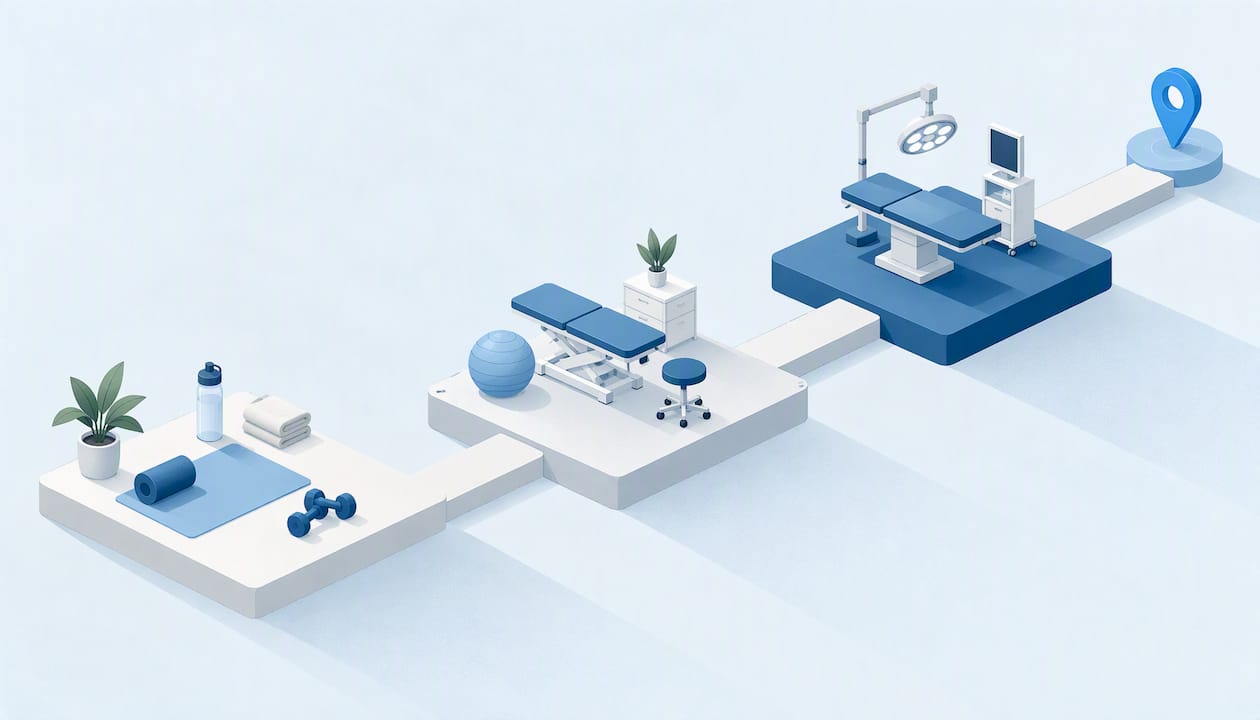
Lumbar radiculopathy is treated in steps. Most people start with conservative care: staying active, physical therapy, anti-inflammatory medication and sometimes injections. Surgery is considered when those measures fail to provide relief. If you have had weeks or months of leg pain, numbness or burning that has not responded, this guide explains each option, what the evidence says and when a minimally invasive, non-fusion operation deserves a conversation.
TL;DR
- Lumbar radiculopathy is pain radiating down the leg, most often from a compressed nerve root linked to a bulging or herniated disc.
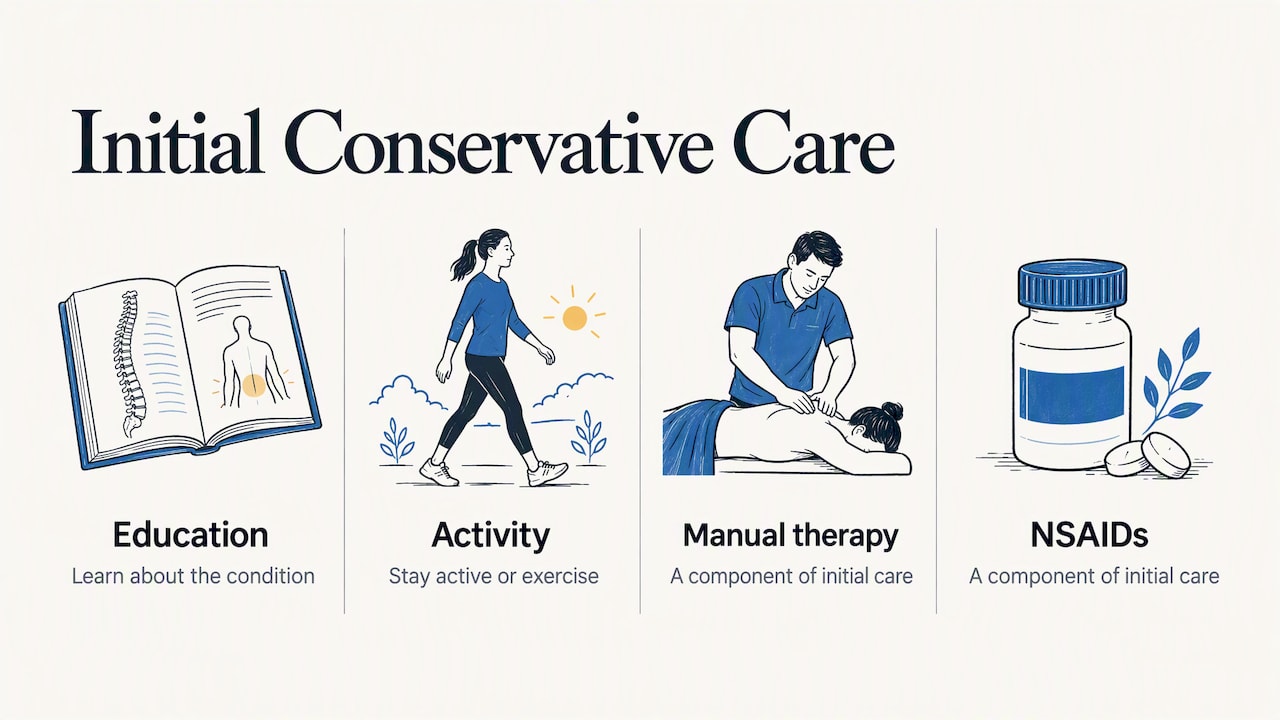
- First-line care is education, staying active, manual therapy and NSAIDs. Prolonged bed rest is discouraged.
- Epidural steroid injections probably reduce short-term pain, but evidence for long-term benefit is insufficient.
- Surgery is considered when conservative treatment fails. Endoscopic decompression and discectomy are designed to relieve the nerve without fusion.
- Weakness, numbness in the groin or pelvis area, or loss of bladder or bowel control needs care right away.
Table of Contents
- What lumbar radiculopathy is
- When to get care right away
- Step one: conservative care
- Step two: injections
- Does lumbar radiculopathy go away?
- Do you need an MRI?
- When surgery enters the conversation
- Our perspective
- Getting an expert read on your scan
- Choosing a treatment path
- FAQ
- Sources
What lumbar radiculopathy is
A nerve root in your lower spine becomes irritated or compressed, and the signal travels along the nerve into the buttock, leg or foot. The usual culprit is a disc that has bulged or herniated, though narrowing of the openings where nerves exit (foraminal stenosis) or of the spinal canal can do the same. Sciatica is the common name when the sciatic nerve pathway is involved. You can read more in our pages on sciatica symptoms and causes and what disc herniation is.
Typical symptoms include sharp or burning pain below the knee, tingling, numbness and sometimes weakness in the foot or leg. Pain often worsens with sitting, coughing or bending.
Not every leg symptom is a pinched nerve. Several conditions mimic a pinched nerve, which is one reason an accurate diagnosis matters before choosing a treatment.
When to get care right away
Contact your provider immediately if back pain comes with unexplained fever, weakness or numbness in the buttocks, thigh, leg or pelvis, or loss of urine or stool control, according to MedlinePlus. Do not wait to see whether these settle on their own. Go to an emergency department if bladder or bowel control changes suddenly.
Step one: conservative care
Clinical guidelines generally favor an initial trial of conservative management before invasive options. That first phase typically includes education about the condition, staying active or exercising, manual therapy and NSAIDs.
What you can do at home
MedlinePlus guidance on back care at home suggests:
- Use ice or heat, and over-the-counter pain relievers, for comfort.
- Avoid heavy lifting and twisting for the first six weeks after pain begins.
- Skip prolonged bed rest. If there are no signs of a serious cause, stay as active as you can.
- Resume exercise gradually after two to three weeks. Walking is part of a recommended aerobic program, and a physical therapist can guide the rest.
Strong core and back muscles also help protect against recurrence. Our article on exercises that strengthen the lower back walks through options to discuss with your therapist.
Physical therapy
Physical therapy builds strength and mobility while symptoms settle. Therapy should ease you forward, not flare your leg symptoms. If your pain gets worse with each session, tell your therapist and your physician, because that pattern can point to a structural problem that exercise alone will not fix.
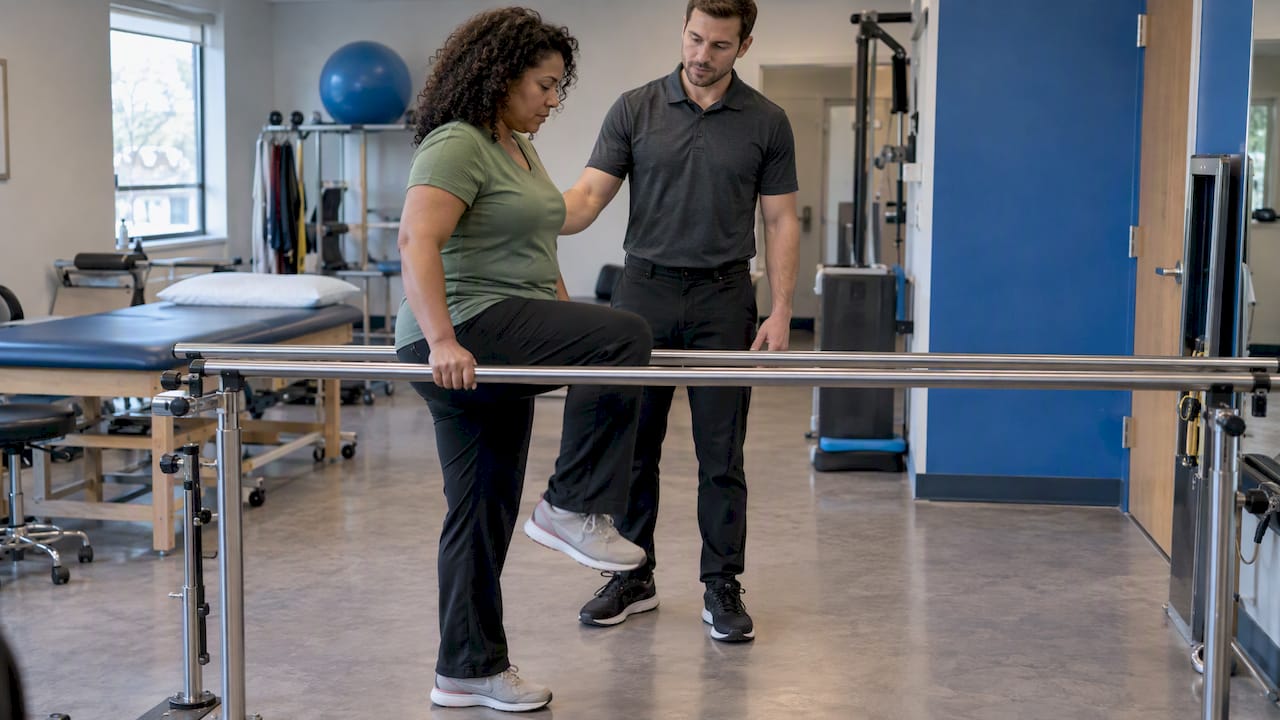
For persistent sciatica, the UK’s NICE guidance suggests considering a combined physical and psychological programme when fear or mistaken beliefs lead a person to avoid normal activity.
Medication
Initial treatment may include NSAIDs, and an oral corticosteroid taper may help in the acute phase, as described in a review of lumbar radiculopathy diagnosis and treatment. Medication manages symptoms while the nerve calms down. It does not remove whatever is pressing on the nerve. Talk with your doctor about your own health history before taking any of these regularly.
Chiropractic care
Many people ask whether a chiropractor can help. Manual therapy is part of the conservative toolkit. If relief never lasts, or leg symptoms persist, that is a sign to get imaging reviewed and a structural cause identified.
Step two: injections
Epidural steroid injections place anti-inflammatory medication near the irritated nerve. A 2025 review found they probably reduce short-term pain and disability in cervical and lumbar radiculopathies, while evidence is insufficient to say whether they reduce long-term pain.
That matches what many patients tell us: the injection helps for a few weeks, then the leg pain returns. A pain specialist or physiatrist can map out more specific treatment pathways if symptoms persist despite conservative care.
Does lumbar radiculopathy go away?
Often, yes, but not always. One review of lumbosacral radicular syndrome estimated that 44% to 65% of patients have recovered at one year. That means a substantial group still has symptoms after a year. Sciatica also commonly returns even after it improves.
Do you need an MRI?
Routine imaging is generally not recommended in the early stages of low back pain unless there are neurological deficits or red flag symptoms. Once symptoms last despite treatment, or when surgery is under discussion, imaging becomes the key tool. It shows whether a herniation, annular tear, bulge or narrowed foramen explains your pain. A normal-looking MRI does not always mean there is nothing there, and our team reviews scans with that in mind.
When surgery enters the conversation
Surgery is considered when conservative treatments fail to provide relief. In practice, that often means you have tried therapy, medication and perhaps injections, and leg pain, numbness or weakness is still limiting your life.
If you have been told fusion is your only option, it is worth asking whether the nerve can be decompressed without it. Our page on reconsidering spinal fusion explains our view.
Endoscopic options
Endoscopic surgery reaches the problem through a small incision using a camera and narrow instruments, so the aim is to relieve the nerve while disturbing less surrounding tissue. Depending on the cause, that may mean:
- Endoscopic discectomy to remove the herniated disc material pressing on the nerve.
- Endoscopic decompression to open a narrowed canal in spinal stenosis.
- Endoscopic foraminal decompression to free a nerve in a tight exit passage.
For a full walkthrough, see our guide to endoscopic spine surgery and our honest look at pros and cons.
Our perspective
We see many people who did everything in the right order: therapy, medication, an injection or two, and still have a leg that burns or a back that will not settle. Often the problem is not a lack of effort. It is that the exact pain generator was never pinned down, or that the only surgery offered was a fusion.
Our approach starts with precise diagnosis. Dr. Mork has performed over 8,000 surgeries, and the practice is built around endoscopic techniques designed to avoid fusion and support a faster return to daily activities. Many patients return to regular activities within days of surgery. We are also a concierge practice, so you have direct access to the surgeon before and after your procedure, not a hand-off to a rotating team.
We do not think everyone needs an operation. We do think that if conservative care has not worked, you deserve a clear answer about what is compressing your nerve and what a less invasive fix could look like.
— Eric
Getting an expert read on your scan
You do not have to travel before you know whether you are a candidate. We offer a remote MRI evaluation for $100 and a one-on-one phone consultation with Dr. Mork for $200. Surgery has no published price. Insurance may cover facility and anesthesia fees but not the surgeon’s fee, and payment is required before surgery.
If you are in Orange County, Naples or Southwest Florida, or willing to travel, start with Concierge Spine Services and send your imaging.
Choosing a treatment path
| Stage | What it involves | Best suited to |
|---|---|---|
| Self-care | Ice or heat, OTC pain relievers, gradual activity | New symptoms without red flags |
| Conservative care | Physical therapy, manual therapy, NSAIDs | Symptoms that persist beyond the first weeks |
| Injections | Epidural steroid injection | Short-term relief to enable rehab |
| Endoscopic surgery | Discectomy or decompression through a small incision | Persistent nerve symptoms after conservative care |
Questions to bring to any appointment: Which structure is compressing which nerve? Does the MRI match my symptoms? If surgery is recommended, is fusion truly necessary, or can the nerve be decompressed alone?
FAQ
What not to do with lumbar radiculopathy?
Avoid heavy lifting and twisting for the first six weeks after pain starts, and do not rely on prolonged bed rest, per MedlinePlus. Do not ignore weakness, numbness in the pelvis area or bladder and bowel changes. Those need prompt medical care.
Is walking good for radiculopathy?
Usually yes. Walking is part of a recommended aerobic exercise program, and staying as active as possible is preferred over bed rest when there are no signs of a serious cause. If walking sharply worsens leg pain or causes weakness, tell your doctor.
Can lumbar radiculopathy be treated without surgery?
Frequently. Education, activity, manual therapy, NSAIDs and sometimes injections are the usual first steps. Surgery is reserved for cases where those do not provide relief.
When should I consider endoscopic surgery?
Consider it when leg pain, numbness or weakness persists despite a reasonable course of conservative care, and imaging shows a structural cause. A phone consultation can help you decide whether you are a candidate.
Sources
- A Review of Lumbar Radiculopathy, Diagnosis, and Treatment
- Sciatica: MedlinePlus Medical Encyclopedia
- Taking care of your back at home: MedlinePlus
- Sciatica (lumbar radiculopathy) management: NICE CKS
- Epidural Steroids for Cervical and Lumbar Radicular Pain
- Management of low back pain and lumbosacral radicular syndrome
- Recommendations for Diagnosis and Treatment of Lumbosacral Radicular Pain